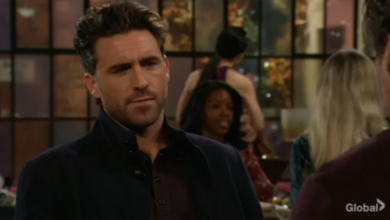
Tessa was horrified when she overheard Ian Ward and Mariah’s secret agreement Y&R Spoilers Shock
The Young and the Restless: Mariah Copeland, Ian Ward, and the Most Disturbing Question Yet — Is the Cult Truly Gone?
On paper, Mariah Copeland should be living the kind of life that proves survival is possible.
She has a loving partner in Tessa Porter.
She has a daughter, Arya, whom she fought relentlessly to have and protect.
She has a family name that no longer represents only manipulation, confusion, and loss.
She has stability. Roots. A home.
And yet, the latest image The Young and the Restless gives us of Mariah is anything but peaceful.
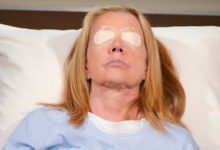
Instead of a warm domestic moment with Tessa and Arya, we see Mariah slipping out of a clinic and vanishing into a bleak, anonymous motel room — alone, isolated, and sharing that space with a man who may not even be alive.
Ian Ward.



A Mystery That Cuts Deeper Than Life or Death
The show frames Ian’s reappearance as a mystery:
Is he alive?
Is he a hallucination?
Is Mariah unraveling?
But beneath that surface-level question lies something far more disturbing — a woman whose trauma never truly left, now resurfacing in a form that blurs memory, manipulation, guilt, and fear.
Viewers know better than to trust a soap opera death. We saw Ian open his eyes in the back of an ambulance after his supposed death at Victor Newman’s farm. That alone is enough to keep the door open.
What makes this storyline uniquely unsettling, however, is that Ian’s presence exists entirely through Mariah’s perspective.
Is he physically there, whispering commands and slowly steering her away from her family?
Or is he a manifestation of the psychological prison he built inside her years ago — trauma masquerading as guidance?
The show refuses to answer, forcing viewers to sit in the same suffocating uncertainty Mariah herself is experiencing.
The Motel Room: A Return to Captivity
Mariah’s behavior is deeply troubling, not because it’s explosive, but because it’s quiet.
She doesn’t flee Genoa City with anger or defiance.
She doesn’t confront Tessa or lash out at her family.
Instead, she drifts.
She chooses an ugly, uncomfortable, isolated motel room — a place that mirrors emotional captivity. It feels less like rebellion and more like punishment, as if some part of Mariah believes she doesn’t deserve the life she built.
And inside that room, there is Ian.
Alive or imagined, he is exactly where he once thrived:
Mariah is cut off from her support system.
Emotionally destabilized.
Physically confined.
It’s the ideal environment for control.
The Shredded Photo: A Line Crossed
One of the most chilling moments comes when Mariah tears apart a photo of Tessa and Arya.
This isn’t symbolic drama — it’s a psychological rupture.
That image represents the family she chose, the life she fought for, the proof that she escaped Ian’s influence. Destroying it to appease him — or the voice of him — feels like handing her abuser the keys to her soul all over again.
Ian appears satisfied.
The audience is horrified.
Because this isn’t regression — it’s surrender.
“The Road” and the Threat of Re-Indoctrination
Even more alarming is the language Ian uses.
He speaks of “the road.”
Of leaving this life behind.
Of something beyond what Mariah is clinging to.
To longtime viewers, this isn’t mentorship. It’s recruitment.
The Path wasn’t a misunderstood community — it was a system of coercion, exploitation, and spiritual abuse. If Ian is asking Mariah to walk it again, he isn’t just dragging her backward. He may be positioning her as the next instrument of his ideology.
The most disturbing possibility isn’t that Mariah is being pulled back into a cult — it’s that she could be groomed to help rebuild it.
A former victim turned vessel.
Alive or Dead — Either Answer Is Terrifying
If Ian is alive, Genoa City is facing a very real external threat:
A cult leader hunting for leverage, influence, and trophies.
If he is dead, the threat is internal — but no less horrifying.
It would mean the cult never truly dissolved.
It simply relocated into Mariah’s mind.
Trauma doesn’t need a living abuser to function. It only needs memory, guilt, and fear.
In that version of the story, every time Mariah chooses the motel over her home, Ian’s voice over her own, she is rebuilding his altar inside herself.
The Quiet Devastation Back Home
Meanwhile, life in Genoa City continues.
Tessa and Daniel are learning how to exist without Mariah — not because they’ve stopped loving her, but because survival demands movement. Tessa mothers Arya. Daniel understands emotional absence all too well.
They are coping.
And that, paradoxically, may be what makes Mariah’s return most dangerous.
Because coming back won’t just mean returning to love — it will mean facing the reality that the people she thought depended on her learned to breathe without her.
For someone drowning in guilt, that stability can feel like rejection.
The Question That Truly Matters
So what is The Young and the Restless really asking?
Is Ian Ward a ghost?
A hallucination?
A survivor?
Or is he something worse — a voice Mariah has learned to keep alive herself?
Whether this storyline becomes brilliant or frustrating depends on one thing: commitment. If the show fully explores religious trauma, coercive control, and the long-term damage of indoctrination, Mariah’s arc could be one of the most powerful stories Y&R has told in years.
But if it retreats into shock value and ambiguity without resolution, it risks reducing a complex survivor into a fragmented plot device.
Because the most terrifying possibility isn’t that Ian survived.
It’s that even if he didn’t, Mariah may have learned how to carry him forward on her own.
And that raises the darkest question of all:
Even if Ian is dead… has Mariah already kept him alive?