The Bold and the Beautiful: Hope, Power, and Betrayal — Carter’s Dream of Family and the Logan Sisters’ Breaking Point
The Bold and the Beautiful: Hope, Power, and Betrayal — Carter’s Dream of Family and the Logan Sisters’ Breaking Point
The Bold and the Beautiful has always thrived on the fragile intersection between desire and consequence. In this world, love rarely arrives without disruption, and happiness is never granted without cost. It is precisely within this emotional architecture that two of the show’s most compelling current arcs are unfolding—one rooted in hope and renewal, the other in betrayal and power. Together, they reflect everything the series does best: exposing the beauty and brutality of intimacy, family, and ambition.
Carter Walton and Daphne Rose: A Rare Promise of Stability
Carter Walton has long been portrayed as a man driven by conviction, intensity, and an unwavering belief in love. Yet his romantic history tells a familiar story—relationships that ignite quickly, commitments made with full emotional force, and heartbreak that follows just as fiercely. Carter does not love cautiously. He loves completely. Beneath his composed professionalism lies a man deeply afraid of ending up alone, one who sees marriage and family not as optional milestones, but as essential anchors of identity.
Daphne Rose enters Carter’s life at a moment of clarity rather than desperation. She is not simply another romantic chapter, but a reflection of timing and alignment. Unlike past relationships, this one unfolds with mutual recognition and emotional balance. Daphne meets Carter’s intensity with steadiness, offering reassurance without sacrificing her independence. Their connection feels deliberate, grounded, and emotionally mature.
When Carter proposes, it does not feel reckless. It feels earned. This engagement is the culmination of years of emotional searching and hard lessons learned. Daphne’s acceptance is equally meaningful—not swept up in spectacle, but rooted in trust and shared vision. A potential wedding in 2026 becomes more than ceremony; it symbolizes redemption, renewal, and the possibility of lasting stability.
As conversations naturally turn toward parenthood, their bond deepens further. Both Carter and Daphne share a strong desire to become parents, seeing family not as a checkbox, but as legacy. For Carter, fatherhood represents permanence and healing. For Daphne, motherhood embodies connection and continuity. Together, they envision a home defined by warmth, belonging, and purpose.




Yet The Bold and the Beautiful teaches its audience to approach happiness with cautious optimism. Fertility struggles, loss, or heartbreak may lie ahead—quiet shadows that remind viewers how fragile even the most sincere dreams can be. Still, the tone of this storyline invites hope. Carter’s journey toward family feels earned, and Daphne’s presence reframes his past not as failure, but as preparation. Their story dares to believe that love can be both passionate and stable—a rare and powerful message in a world defined by chaos.
Brooke and Katie Logan: When Family Becomes the Deepest Wound
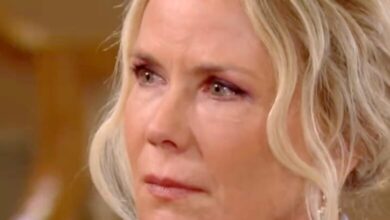
If Carter and Daphne’s story embodies hope, the conflict between Brooke and Katie Logan exposes the darker truths of power, entitlement, and betrayal.
This is not merely a business dispute. It is a reckoning. Katie Logan’s request—to use her own last name, Logan, as the identity of her fashion brand—is disarmingly simple. The brand, gifted to her by Bill Spencer, represents independence and self-definition. Yet Brooke’s refusal transforms this moment into something deeply personal.
For years, Katie has been Brooke’s most steadfast defender. She supported her sister through countless romantic implosions, argued for her worth, and helped reunite Brooke and Ridge even when it cost her emotionally. That history makes Brooke’s current stance devastating. It is not just rejection—it is erasure.
Brooke’s resistance cannot be separated from her own insecurities. The Logan name, in her eyes, feels like something to protect, even hoard, as if sharing it would dilute her hard-won significance. But this instinct is rooted in fear, not fairness. Brooke’s legacy has never existed as a standalone brand within Forrester Creations. There has never been a “Logan Designs” empire. Her prominence comes from her personal identity and her relationship with Ridge—not ownership of the Logan name itself.
Ridge Forester’s role only deepens the injustice. By siding with Brooke and framing Katie’s ambition as opportunistic, he reinforces a familiar hierarchy—one where power is granted selectively and legitimacy flows through Forester approval. His dismissal ignores Katie’s years of quiet, competent leadership as head of public relations, where she protected the company through crises with little recognition.
When Katie faced a minor personal issue, Brooke and Ridge replaced her with an outside firm, shut her out of communication, and stripped her of purpose without honest confrontation. Her eventual move to Spencer Publications was not betrayal—it was survival.
Taken together, these actions form a pattern of systemic exclusion. Brooke’s attempt to block Katie’s brand is not an isolated moment of cruelty; it is the culmination of years of marginalization. Viewers’ outrage reflects a moral imbalance, not blind loyalty. Fans have watched Katie sacrifice repeatedly, only to be denied agency and identity.
Accountability, Consequences, and the Power of Selfhood
Soap operas promise consequences, and fans are waiting. They do not want Brooke destroyed—they want accountability. Whether that reckoning comes through the success of Katie’s brand, the erosion of Brooke’s authority, or a painful emotional awakening remains to be seen.
The possibility that Katie’s fashion line could thrive—perhaps even surpass Forrester Creations—offers poetic justice. It would redefine success outside the structures that excluded her and challenge the belief that legitimacy must flow through established power.
At its core, this storyline asks essential questions: Who gets to decide whose dreams matter? When does protecting legacy become an excuse for control? And how often does fear masquerade as authority?
Katie Logan’s story is no longer one of quiet endurance. It is a declaration of selfhood. A demand to be seen not as a supporting character in her sister’s life, but as a woman whose name—Logan—belongs to her just as fiercely, just as rightfully, and just as unapologetically.
In a world where love is constantly tested, The Bold and the Beautiful reminds viewers that the most dangerous battles are often fought within families—and that hope, when chosen after heartbreak, is the bravest act of all.